If you ask people why they have not taken a first aid course yet, the answers usually split along familiar lines. Some say they can not save a complete day at a training facility. Others doubt that online modules can teach them how to deal with a choking toddler or a coworker in cardiac arrest. I have educated both styles for many years, from silent Monday-night CPR training sessions to high-intensity weekend workshops, and the truth is much more nuanced than a basic thumbs up or down. The very best selection depends upon your objectives, your threat account at the workplace or home, and just how you discover under pressure.
This overview lays out what online and in-person options each succeed, where they fail, and how to match the format to your requirements. I will certainly reference usual elements of a first aid and CPR course, how certification functions, and what to expect from a CPR refresher course. The objective is to help you choose training that really sticks, not just a certificate that expires in your wallet.
What first aid training truly covers
People picture bandages and ambulance sirens. In practice, a standard first aid and CPR course instructs recognition, prioritization, and a sequence of straightforward activities that acquire time until experts get here. The skill set periods avoidance, evaluation, and hands-on interventions. A versatile first aid course usually includes:
- Scene safety and security, main study, and asking for help CPR for adults, frequently with options for kids and infants Automated outside defibrillator (AED) use Choking response across age groups Bleeding control, including tourniquet basics Recovery placement and airway management Recognition of stroke, cardiovascular disease, and anaphylaxis Basic wound treatment, burns, and fractures Workplace-specific risks as required by regulation
That checklist covers far more than chest compressions. The throughline is judgment: what to do initially, what not to do, when to stop, and exactly how to turn over to paramedics. Whether rockhampton first aid courses - brisbanefirstaidcourses.com.au you examine online or face to face, an effective first aid and CPR course transforms spectators into qualified first responders that can act in the unpleasant middle between incident and ambulance.
What "online" generally means
Online first aid courses range from premium, scenario-driven training with interactive video to bare-bones slide decks. The good systems imitate choice factors: a coworker collapses, you run a main survey, you choose whether to call for help before or after examining breathing, and the system reacts to each selection. Done well, this can coach your psychological model as properly as a classroom lecture.
Where it gets blurry is the abilities check. For CPR, the gold requirement consists of a manikin that measures compression deepness and rate, and an instructor who readjusts your pose up until you struck the target rhythm. Many recognized programs now provide mixed options: theory online, after that a short, in-person skills analysis on a manikin with comments. Employers and regulatory authorities usually choose this blended course since it documents hands-on competence.
There are fully on the internet CPR courses that provide a conclusion document after tests, yet they might not satisfy work environment or licensing demands. If you require a first aid certificate for work, check the fine print. Demands vary by sector and territory, and some define a minimal variety of in-person hours or an instructor-signed abilities check.
What the classroom and lab deliver
In-person first aid training centers vary in taste. A peaceful neighborhood session could fit twenty learners with two teachers revolving between tables, each with handwear cover boxes, pocket masks, and training AEDs. A high-fidelity laboratory could add reasonable moulage, timed situations, and debriefs that feel like a brief fire academy. In either case, the tactile components matter.
You really feel the upper body recoil under your hands and hear the click when you struck the best deepness. You practice rolling a bigger grownup right into the healing position, not simply viewing it in a video clip. You talk to an online "client," get the clues in their voice, and learn to steady your own. An excellent teacher sees the depression in your shoulders that implies you are pushing with your arms rather than your hips, then fixes it with one sign. Those details tighten the skill loophole in a way that on-line training merely can not replicate on its own.
This does not indicate the class is best. Conventional lecture blocks can drag. A room loaded with blended histories can lead to content that really feels as well progressed for some and as well fundamental for others. The best trainers adjust on the fly, break into tiny groups, and trainer to ability, not seat time.
Time, expense, and ease, without the glossy promises
Online or mixed layouts normally win on organizing. You can take the theory part in the evening, on a commute, or in twenty-minute chunks. If you work changes or have family members duties, that flexibility is not a perk, it is the difference between training and never getting educated. Prices vary, but online-only alternatives usually are available in less expensive per pupil since there is no area to rent out and less staff hours. A mixed program, where you complete theory online and then go to a brief abilities session, still saves time contrasted to a full-day class.
In-person courses ask for a block of time. For a detailed first aid and CPR course, expect four to eight hours, with additional modules if pediatric treatment or sophisticated bleeding control is consisted of. If your employer coordinates an on-site program, that can flip the ease formula. A well-run on-site brings the manikins to you, straightens circumstances with your environment, and decreases travel.
Beware of judging exclusively on price. Two CPR courses might both problem acknowledged first aid certifications, yet one gives you two hours on comments manikins while the various other cycles thirty individuals with one manikin in 5 mins each. People bear in mind the price, however when a colleague collapses, they will keep in mind how it felt to locate a chest rhythm and hold it for 2 mins straight.
Skill retention and what in fact sticks
The skill degeneration curve for CPR is well recorded. Without technique, compression depth, rate, and self-confidence deteriorate within 3 to 6 months. That is why lots of suppliers suggest a CPR refresher course each year, even if your certificate remains legitimate for two or 3. Short booster sessions matter greater than one lengthy training course every couple of years.
Online training helps with micro-refreshers. Ten-minute components on choking or AED pad positioning can be done quarterly. A quick interactive circumstance over coffee can reset the psychological sequence: inspect responsiveness, phone call for aid, open air passage, check breathing, begin compressions, utilize AED. Where you require in-person time is the electric motor pattern. The initial minute of compressions commonly looks great. By minute 2, many learners wander superficial or sluggish. Only a manikin with responses, and a coach standing over your shoulder, will correct that in actual time.
If I had to divide a restricted allocate a work environment, I would certainly money a first blended first aid and CPR course with at the very least 90 minutes of hands-on manikin time per person, then timetable quarterly mini refresher courses online, and a brief in-person skills tune-up at the 1 year mark. That rhythm balances theory, practice, and the reality that teams neglect under stress if they do not rehearse.
Real-world instances where style matters
I think about a retail store group that chose online-only training because of staff turn over and organizing frustrations. When a customer collapsed, the group executed the key survey well. They called for aid swiftly, managed the group, and positioned the consumer in the recuperation setting. All of that came right out of the on the internet components and they implemented cleanly. Yet when they dealt with a choking event two months later on, the improvised back strikes were timid and the stomach drives expensive. An instructor would certainly have taken care of both by physically directing hand position and revealing the difference between a gentle rub and a strong blow angled up. They did solve the choking, but it took longer than it should have, and the team felt trembled. They arranged an abilities session the next week and found just how much responsive training helps.
On the opposite, I collaborated with a manufacturing website that trained in person as soon as every 3 years and neglected refresher courses. Their very first aiders were strong on day one. A year later, in a drill, half the group neglected to switch on the AED before positioning pads. Not a situation in training, yet a real hold-up in the wild. We included short on the internet booster components and five-minute team huddles quarterly. The following drill ran crisp and quick. The mix of styles resolved a problem that neither format alone had actually addressed.
Certification, conformity, and the fine print
Regulatory frameworks drive many training choices. Some industries require accredited first aid courses with certain durations, material, and trainer certifications. A healthcare setup may demand adult, child, and baby CPR training with AED, plus oxygen management and bag-mask ventilation. Building websites frequently need specific blood loss control and immobilization content. Childcare carriers might require pediatric first aid and CPR that covers choking and injury prevention in age-specific detail.

Online theory can meet the expertise criterion. For the certification to satisfy an auditor or inspector, the program usually needs a recorded practical evaluation. Lots of respectable organizations offer a first aid certificate only after you pass an in-person abilities check, also if you finished the lessons online. Do not presume equivalence. If your office relies upon a certification to fulfill lawful duty-of-care requirements, ask the service provider to map course components to the policy you should meet. A top quality service provider will gladly reveal that mapping.
If you are renewing, a CPR correspondence course may be shorter, especially if you can show capability swiftly on a feedback manikin. On the internet pre-work can reduce the class block. Still, expect to press to deepness, preserve price, coordinate with ventilations if needed, and operate the training AED smoothly.
The human variable: stress and anxiety, confidence, and teamwork
People freeze for predictable factors. They stress over doing harm. They really feel exposed when others gather around. They have a hard time to entrust. Educating format affects those stressors.
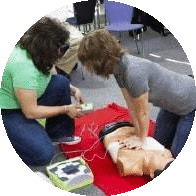
Online settings are exclusive. Learners can pause and replay without embarrassment. Quieter students usually prosper there, and their composed evaluations show it. Face to face, nevertheless, the social component prepares you for a chaotic scene. You speak out to designate somebody to call an ambulance and somebody else to bring the AED. You discover to claim "I am taking control of compressions" aloud without apology. Those declarations sound straightforward on paper and feel harder in the moment. Experimenting peers makes it less complicated later.

I watch posture as long as efficiency. The learner that starts compressions with secured elbow joints but loose shoulders will tire. The one who thinks twice to push strongly because they are afraid damaging ribs needs a tranquil description that deal with compressions may crack cartilage, however superficial compressions trade convenience for failure. I have seen self-confidence increase noticeably in a ninety-minute laboratory. People leave standing taller, not because they aced a test, yet due to the fact that their hands did the work and the manikin confirmed it.
Technology is improving, but the floor still matters
Feedback manikins have elevated bench. They report depth, rate, recoil, and hands-off time, in some cases with a straightforward traffic light, occasionally with numerical targets. Even budget-conscious programs now include at the very least 1 or 2 of these tools. In online settings, app-enabled personal manikins and inflatable tools with sensing units exist, and they assist home learners get closer to actual practice.
Still, the flooring issues. A soft mattress hides shallow compressions. Practicing on a rigid surface instructs you to move your whole body, not just your arms. Learning to bump a shoulder and yell to check responsiveness, to tip the head and check for breathing for an optimum of 10 seconds, and to place pads around a bra strap or chest hair, these are nuances finest discovered in a physical space. An instructor can simulate challenges you may deal with - tight restrooms, crowding, inadequate lighting - with chairs, cones, and tape. That improvisation is where classroom training makes its keep.
When online-first makes the most sense
There are situations where online-first training is the appropriate call.
- You need fundamental expertise fast for a low-risk atmosphere and plan to add an in-person abilities inspect later. Your group is distributed and can not gather conveniently, but you can deliver AEDs and set up staggered neighborhood analyses with partner instructors. Learners speak various mother tongues, and the online system offers captions, pausing, and rewinds that enhance understanding. You are doing a CPR correspondence course for individuals that lately had hands-on technique, and the goal is to strengthen sequence and decision-making. You want to keep capability in between complete qualifications with micro-scenarios and short quizzes.
In each of these, the online part amplifies accessibility and retention. The caveat stays: for CPR and choking, routine regular hands-on time with responses, even if brief.
When in-person is the smarter first step
There are likewise clear signals that you must begin in person. If your workplace hosts huge groups, utilizes hefty tools, or has long EMS action times, you benefit from actual technique. If your team stores an AED on website, they ought to experiment the training pads and system, not simply enjoy a demonstration. If you oversee children or prone grownups, you require to feel the distinction between infant and adult compressions. If your group has actually never trained before, the classroom constructs a common baseline and lets a teacher correct typical misconceptions that continue online, like "I need to check for a pulse prior to beginning compressions" when current lay rescuer guidelines prioritize inspecting breathing and responsiveness.
Picking a provider without getting shed in logos
Brand recognition assists, however not all first aid courses are equivalent, even under the exact same banner. Look past the brochure.
Ask just how much individual manikin time each student gets, and whether the manikins supply real-time feedback on deepness and price. Inquire about instructor-to-student ratios. 10 students to one instructor is practical, fifteen is pushing it unless there is a strong aide. Validate whether circumstances mirror your actual threats. If you function around forklifts, demand practical injury simulations. If your group staffs a fitness center, make certain the CPR training consists of grown-up and child circumstances and AED pad placement on perspiring skin.
If a carrier markets as First Aid Pro or a comparable name, treat it as a beginning point, not a surface. What matters is: do they adapt the first aid and CPR course to your setting, do they fulfill your governing criterion, and do they offer a first aid certificate that your firstaidpro.com.au industry recognizes? Good companies are transparent and will supply referrals from similar workplaces.
The expense of doing it halfway
Partial training is common. A team does theory online and never routines the abilities session. Or they do a one-off in-person day and afterwards avoid refreshers for several years. The outcome is foreseeable. Individuals remember just sufficient to be nervous, inadequate to be efficient. The remedy is not a lot more hours. It is a much better cadence.
Front-load tactile abilities in year one. Keep concept present with brief on-line components in quarters 2 and 3. Do a quick in-person skills tune-up in quarter four. Afterwards, maintain a pattern you can maintain. A two-year cycle with a minimum of one hands-on session per year will certainly keep your CPR and first aid capability from fading to no. The same reasoning puts on a CPR refresher course; shorter, more regular touchpoints beat a marathon every couple of years.
Remote and crossbreed teams: functional means to link the gap
Distributed business often stall since logistics appear discouraging. The workaround is a kit-based version. Ship small training manikins to local champs, schedule cohort-based online lessons with real-time instructors over video, and afterwards run local abilities checks in borrowed spaces - a conference room, a neighborhood hall, also a removed break location with a company floor covering. Rotate equipment and capture sign-offs with photos and time stamps. It is not extravagant, yet it fulfills standards and builds knowledge with the actual AED model you have, not a common image.
For family members and caregivers, a recreation center can organize regular monthly abilities evenings where individuals who completed an on the internet first aid course come for a one-hour hands-on session. The barrier to entrance stays reduced, the commitment remains short, and the community gains layers of qualified responders.
The misconception of best strategy vs good-enough action
Learners fret about failing a perfect criterion. They ask about compression rates to the decimal and whether their hand should be one finger-width or 2 above the xiphoid. Precision issues in training, however in the wild, speed to initial compressions and uninterrupted high quality trump tiny variants. I train individuals to chase a target rhythm of about 2 compressions per 2nd, allow the upper body completely recoil, and reduce pauses. If you are within array, you are doing much more good than you think.
Online tests can overemphasize trivial matters. Class drills can overstate showmanship. The sweet spot is a sensible mindset: do what you can with what you have, begin currently, and maintain going till help takes control of or the person wakes or an AED recommends you to stop. A first aid and CPR course, whether online or face to face, ought to leave you keeping that predisposition for action.
Pros and cons at a look, without the fluff
Here is a succinct comparison to anchor the decision.
- Online and blended toughness: flexible scheduling, scalable for large or remote teams, cost-efficient concept delivery, superb for knowledge refreshers, available for multilingual learners. Online and combined restrictions: minimal tactile coaching without an abilities check, variable acceptance for managed functions, threat of easy learning if web content is low quality. In-person staminas: hands-on mastery with feedback manikins, prompt coaching on position and method, realistic circumstances that develop teamwork and voice, greater confidence transfer under stress. In-person restrictions: scheduling and traveling friction, higher per-seat expense, quality varies by instructor-to-student ratio and equipment. Best happy medium: concept online plus a concentrated, high-quality skills lab, after that brief quarterly refresher courses with an annual hands-on tune-up.
Making your choice with eyes open
Start with your "why." If your goal is to hold a trustworthy first aid certificate for compliance only, a certified blended course is commonly one of the most reliable course. If your goal is to secure a certain populace - children in a daycare, older adults in a community center, single workers in a storage facility during the night - weight the hands-on part heavily and ensure scenarios match your reality.
Look at your current state. Has your team ever touched your AED? Do employees recognize where it is? Do they recognize exactly how to change from compressions to pads without fumbling? If the answer is no, include an in-person block soon. For homes, consider a portable in-person class every 2 years and supplement with on-line CPR training refreshers for the entire family members. For athletic trains, book a CPR course that drills abrupt heart attack on the sideline with an AED you can bring at a jog.
Measure what you can. After training, run a five-minute drill once a quarter. Simulate a collapse, time to very first compression, time to AED pads on upper body, and time to first shock. Videotape it. Share outcomes. The act of measuring improves performance, and it will inform you when an on-line micro-module suffices and when you require to bring a trainer back in.
Final ideas from the training floor
Across hundreds of sessions, one pattern maintains turning up. People bear in mind the minute their compressions struck the best depth and the comments light transformed environment-friendly. They bear in mind the first time they peeled AED pads and smoothed them onto a manikin while calling out "clear." They remember the debrief where an instructor walked through what went well and what can be sharper, not as a scold yet as an instructor. Those memories reside in the muscles as long as the mind.
Online devices have actually made first aid training much more easily accessible and extra consistent. In-person method makes it real. The majority of teams do best with a blend: learn the why and the series online, then show up and function the skills till they really feel all-natural. Maintain the cycle selecting brief refresher courses, including a CPR correspondence course when your certification comes due or your drills begin slipping.
If you commit to that tempo, it hardly matters whether your first session is on-line or in a class. What issues is that you begin, you exercise, and when it counts, you act.